Large snow piles, wet snow and unnecessary water losses: Discover what really matters when building an efficient snow base for the ski season.
Base-layer snowmaking:
More snow doesn’t always mean better snowmaking
When temperatures first drop below freezing in autumn, the race against time begins at many ski resorts. Snowmaking systems are running at full capacity, every minute of cold weather is put to use, and the goal is to produce enough snow for the upcoming season as quickly as possible.
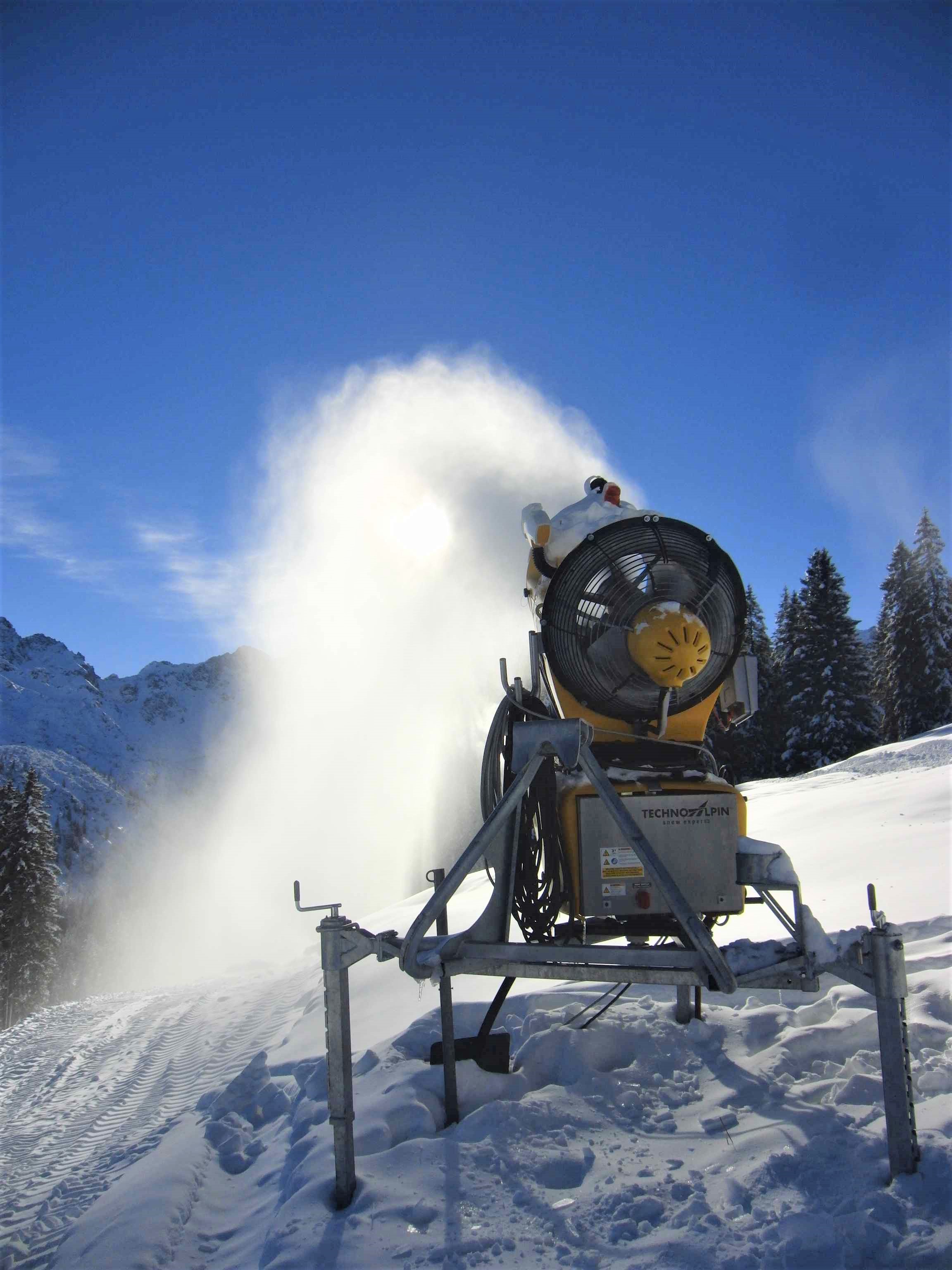
However, producing large amounts of snow or building impressive snow piles doesn't automatically mean successful base-layer snowmaking. Focusing solely on water flow rates at the snow guns can lead to unnecessary water consumption and potentially even poorer slope quality.
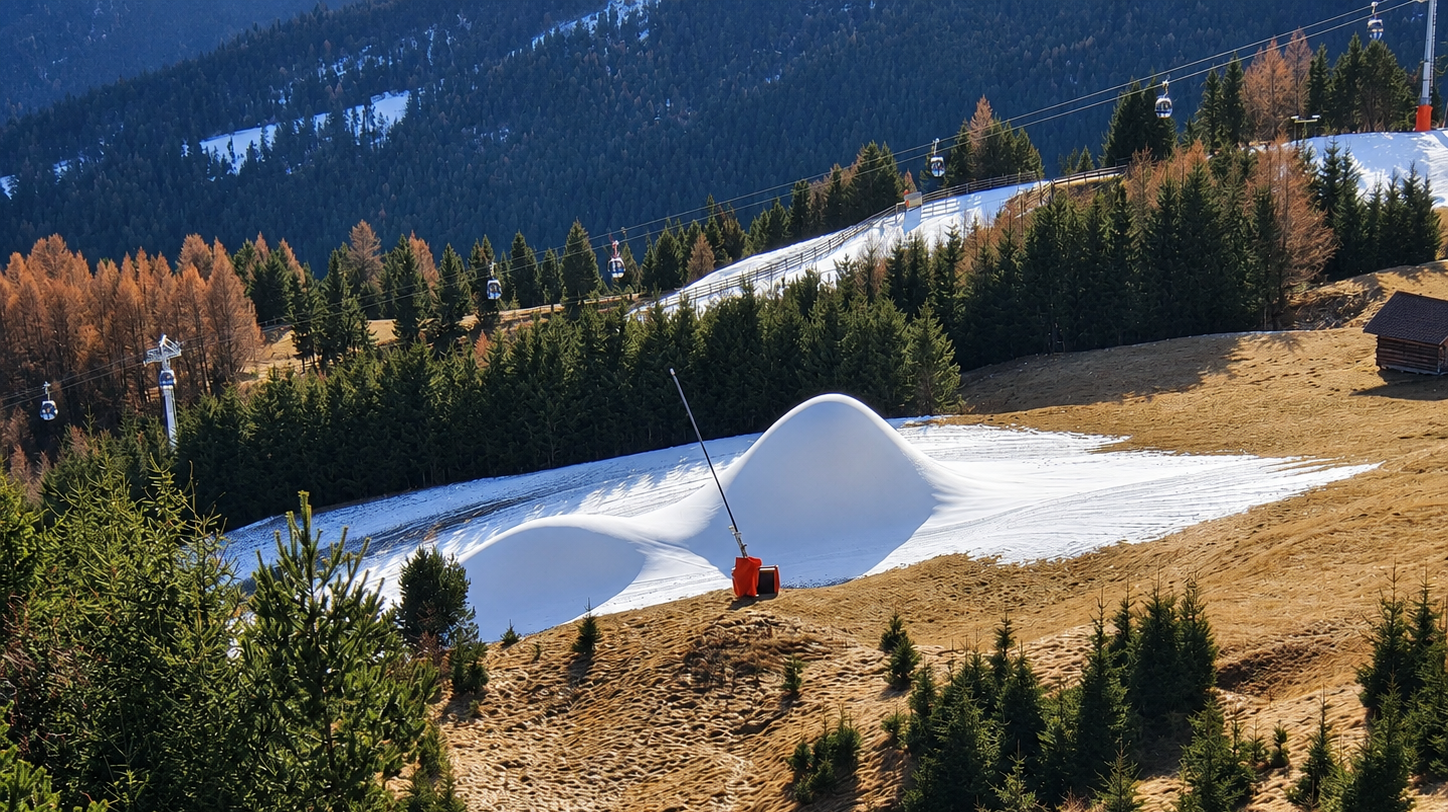
Snow piles or wide-area snowing? A question of strategy
Whether to build large snow piles or spread artificial snowmaking coverage more evenly across the slopes depends largely on the planned opening date of the ski run or resort and the weather conditions expected in the meantime.
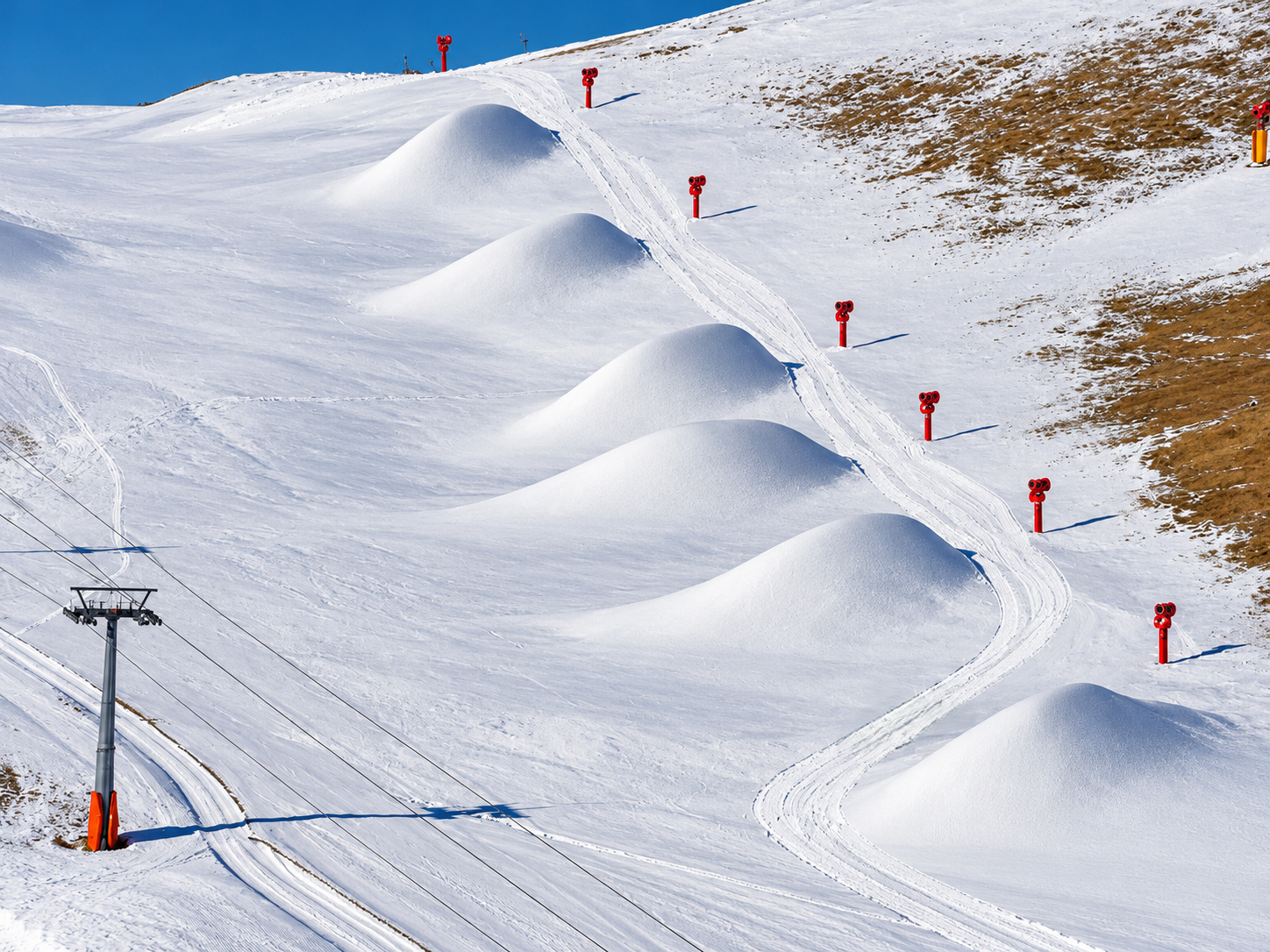
The closer the planned opening date gets, the more sense it makes to gradually switch from pile snowmaking to more uniform surface coverage. This reduces the amount of snow that needs to be pushed and distributed later, helping speed up slope preparation before opening day.
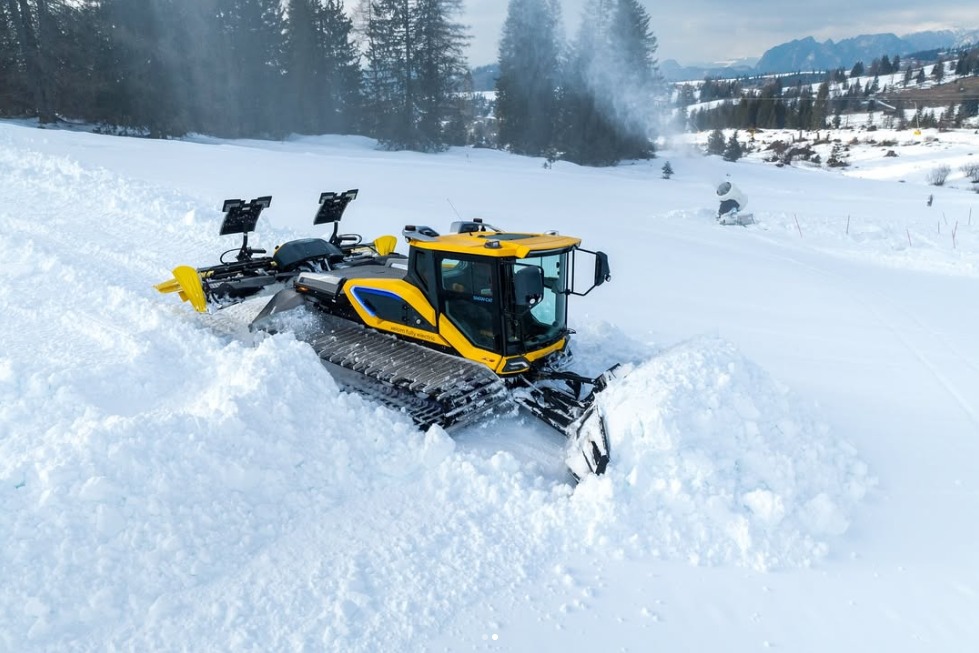
Large snow piles have a relatively small surface area compared to their volume. This generally makes them more resistant to temporary warm spells than a thin, evenly distributed snow layer.
However, building large snow piles also has its drawbacks.
As a snow pile grows higher, the distance between the snowmaking plume and the snow surface decreases if the snow gun's direction remains unchanged. This gives the water droplets less time to freeze completely, increasing the risk of producing wetter snow.
Distributing the accumulated snow later can also require considerable effort. Large, partially hardened snow piles place significant demands on snow groomers. In addition to increased machine hours and fuel consumption, difficult working conditions can also increase the risk of vehicle damage.
There is no single strategy that works in every situation. What matters is when and where the snow will actually be needed and what weather conditions can be expected before it is distributed.
Make every cold minute count — but not at any cost!
Especially in autumn, snowmaking often continues even when temperatures are close to the operational limits. The pressure to establish a sufficient snow base as early as possible is understandable.
But this is precisely where caution is needed.
Snowmaking at excessively high wet-bulb temperatures or with snow guns that are not correctly adjusted can result in snow with excessive free-water content.
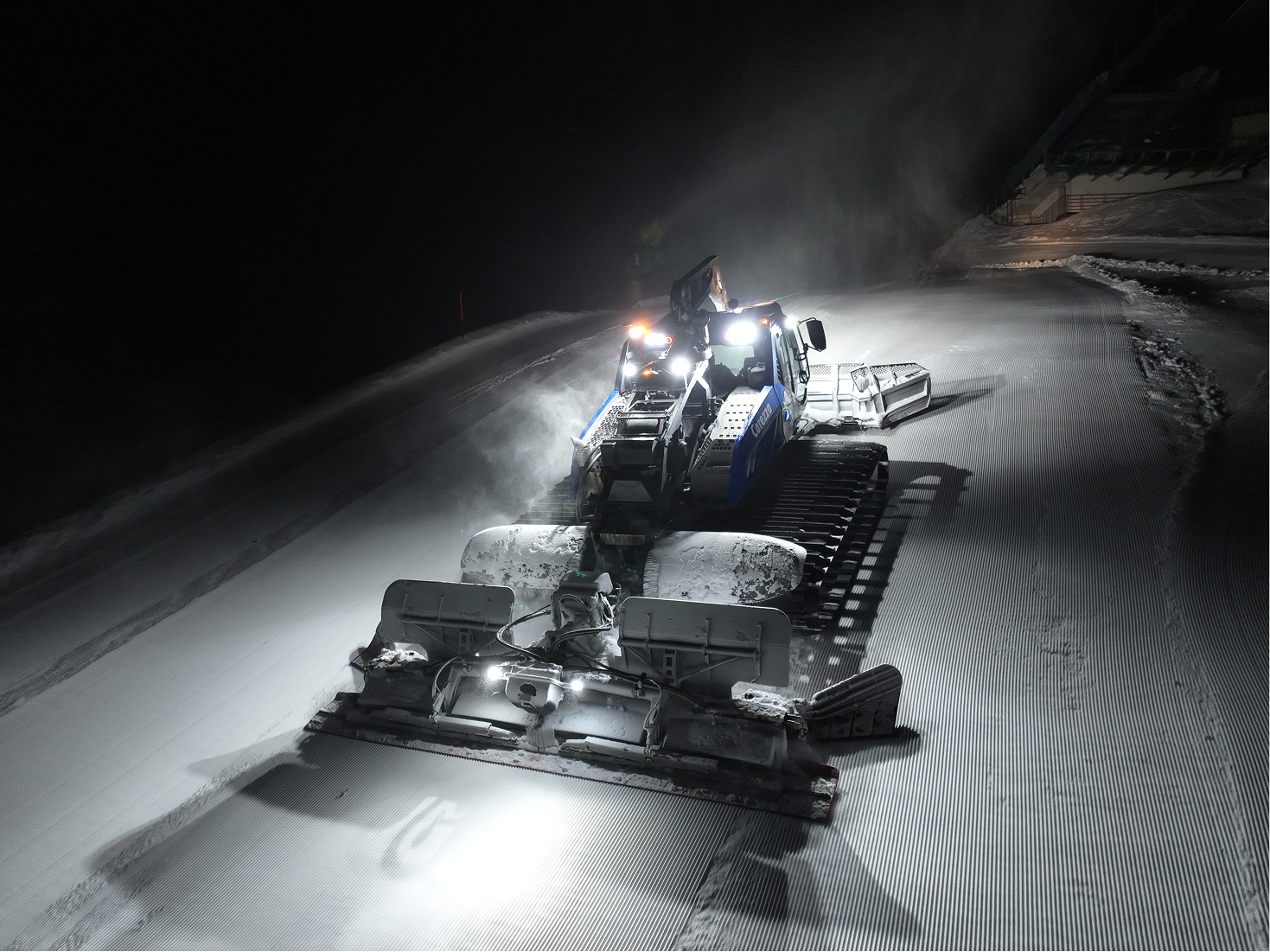
The consequences become obvious when snow groomers start distributing the snow. Wet snow freezes onto the track cleats and front blades, reducing machine performance and making snow distribution increasingly difficult.
Even more concerning are the effects on the developing snow base. When excess water freezes within the snowpack, hard, icy layers can form, negatively affecting edge grip and overall slope quality.
The vegetation underneath must not be overlooked either. Highly saturated, compacted or icy snow layers can restrict gas exchange with the soil. Combined with prolonged snow cover and mechanical stress, this increases the risk of vegetation damage. Brown patches of grass with poor regrowth in early summer may be one consequence of unfavorable snowmaking conditions.
Don’t just check the snow guns — check the snow!
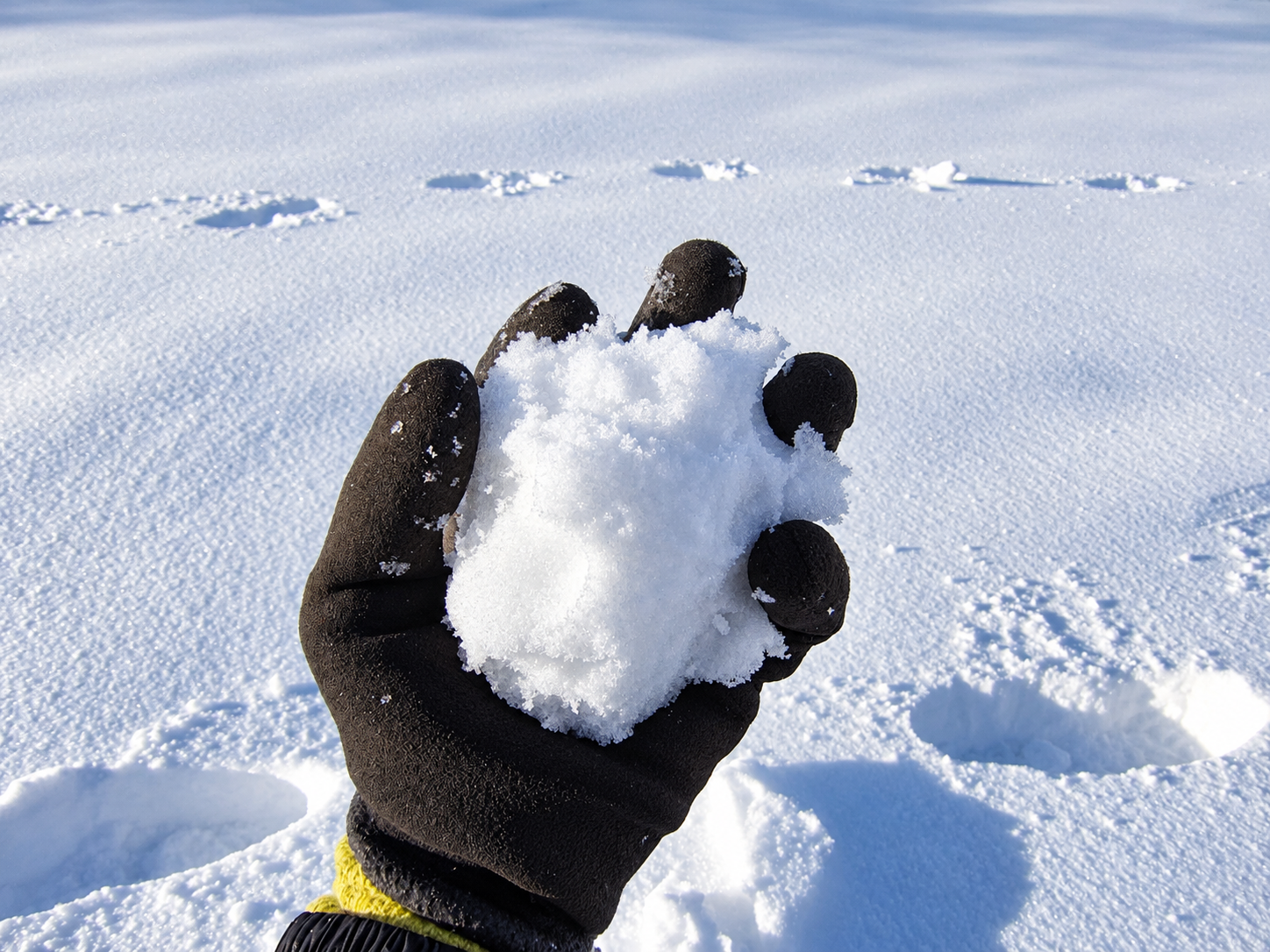
One of the most important tasks during base-layer snowmaking is regularly checking the actual quality of the snow being produced.
Simply checking from a distance whether a snow gun is running and producing a strong plume is not enough.
What matters is not just what comes out of the snow gun, but the actual quality of the snow when it reaches the ground.
Regular on-site inspections and targeted snow quality checks are therefore essential. Simple snowball tests, assessments of free-water content and, where necessary, more advanced measurement methods can help identify incorrect settings before they become a bigger problem.
Understanding the snowmaking process makes it possible to respond in time and avoid producing unnecessary quantities of unsuitable snow.
Wind drift: Snow produced isn’t necessarily snow on the slope
Another frequently underestimated factor is snow loss caused by wind.
With unfavorable wind direction or excessive throw distance, a considerable amount of manufactured snow can end up outside the intended ski slope area.
Snow gun positioning, direction and operating settings should therefore be regularly adapted to changing wind conditions.
Especially in autumn, every cubic meter of stored water is valuable. Water wasted during the first snowmaking periods may be missing when the next cold spell arrives.
Reservoirs and water cooling: Operating strategy matters here too
Water temperature management is another often underestimated aspect of snowmaking.
Particular attention should be paid to reservoir aeration systems.
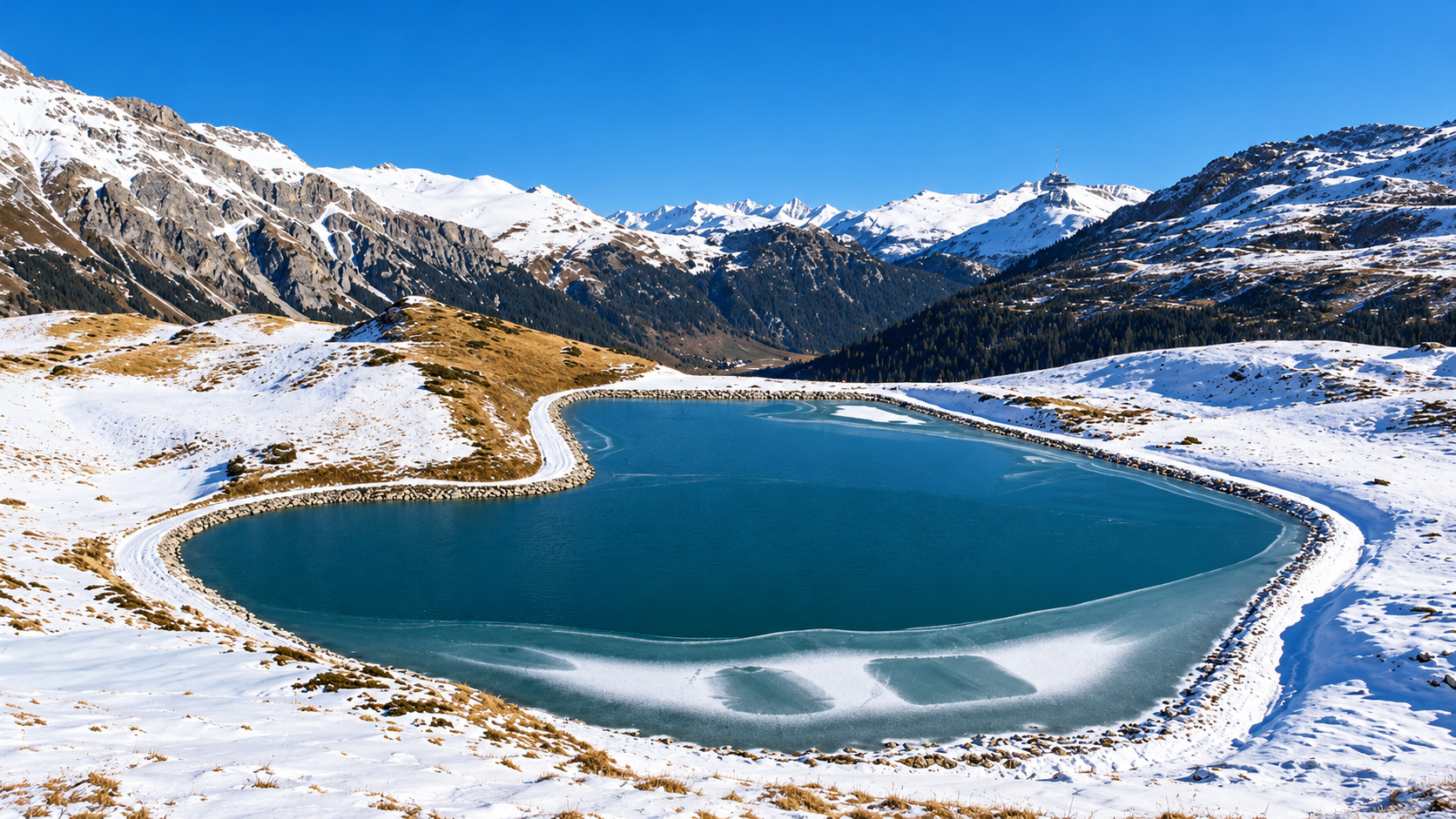
Water reaches its maximum density at approximately 4 °C (39 °F). During autumn, colder water may therefore remain in deeper layers, while warmer water stays closer to the surface. Mixing these layers through aeration can increase the temperature of the water drawn from deeper levels.
Reservoir aeration should therefore not simply be operated by default. Measuring water temperatures at different depths is essential to determine whether mixing is beneficial under the prevailing conditions.
Cooling towers should also be operated according to actual demand. They consume electricity and, by their very nature, cause water losses through evaporation. Continuous operation is therefore not necessarily economical.
The goal should be to supply snowmaking systems with water at the lowest practical temperature while minimizing energy consumption and water losses.
Successful base-layer snowmaking is about more than maximum output
Successful base-layer snowmaking requires experience, technical knowledge and, above all, continuous decision-making directly on the mountain.
It's not the highest snow piles or the largest production volumes that determine success. Snow quality, proper distribution and responsible management of water and energy are what really matter.
Mistakes made during early-season snowmaking often require considerable effort to correct later.
In our next blog article, we'll take a closer look at how manufactured snow is transformed into a uniform, stable and durable base layer – and what really matters during the first grooming operations of the season.
Better snowmaking starts with knowledge
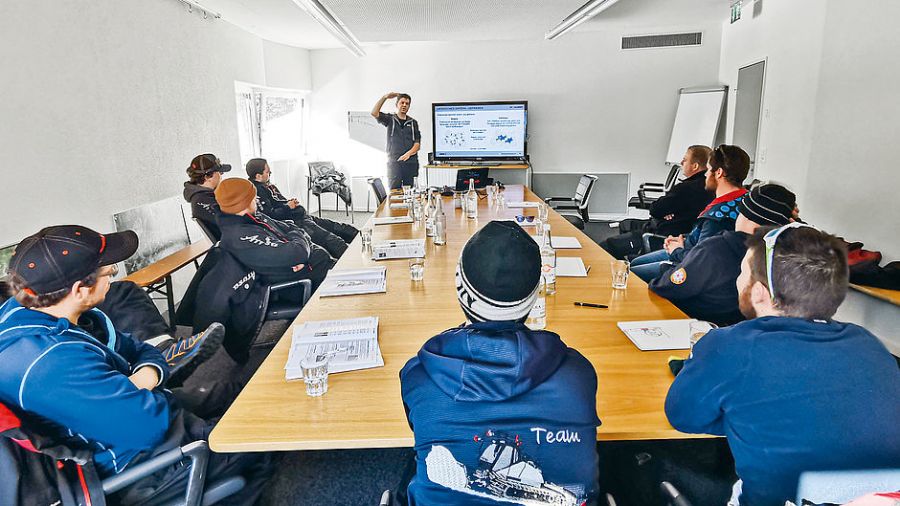
S&E – SlopeExperts supports ski resorts with hands-on training covering technical snowmaking, snow quality and the interaction between snowmaking and slope grooming.
Want to strengthen your team's expertise and improve your early-season snowmaking operations? Get in touch – we'll be happy to support you with practical, on-site training at your ski resort.
Ready to take your slopes to the next level?
Whether you need targeted training, strategic consulting or temporary reinforcement - we are your partner for efficient slope grooming and sustainable snow management.