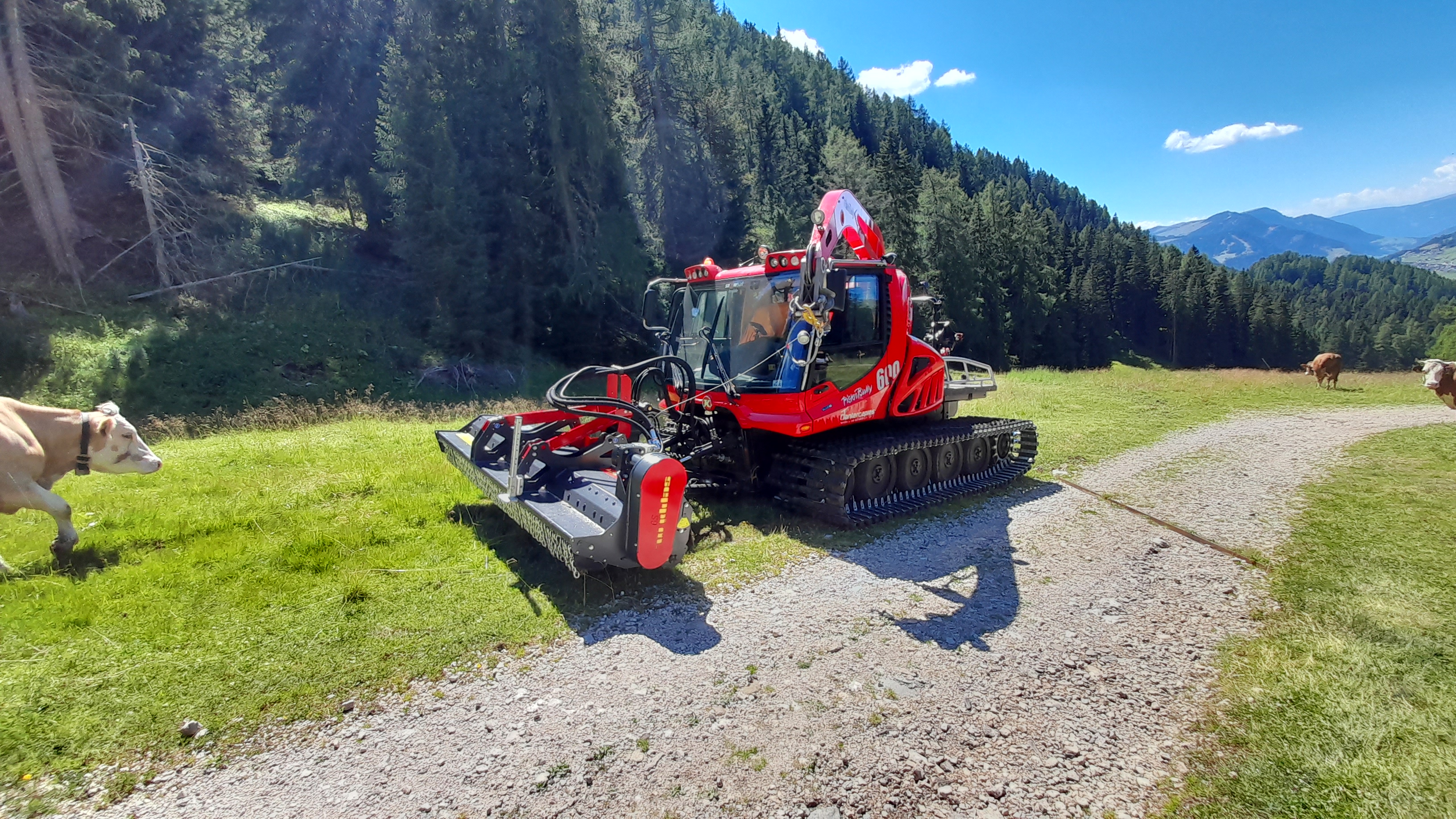
Find out why summer slope maintenance is essential for high-quality ski slopes. Less snow, lower costs, sustainable snowmaking, and greater safety.
Summer Slope Maintenance: The Foundation for High-Quality Ski Slopes
Why Summer Maintenance Is Essential for Ski Resorts.
The quality of a ski slope is determined long before the first snowfall. During the snow-free months, the foundation is laid for an efficient, safe, and sustainable winter operation. Consistent maintenance of ski slopes improves snow adhesion, reduces the need for technical snowmaking, and protects the slopes from long-term damage.
For ski resorts, summer maintenance is therefore an essential part of professional slope management. At the same time, it makes a significant contribution to conserving natural resources, as every cubic metre of snow saved reduces water consumption, energy demand, and the operating hours of snowmaking systems.
A dense grass sward forms the foundation
The primary objective of summer maintenance is to establish a dense and resilient grass sward. It provides the ideal foundation for the first snowfall and ensures that the snowpack bonds as closely as possible with the ground.
The grass on ski slopes can also be used productively. Many ski resorts have the areas cut for hay production or used as grazing land. Once the livestock has been removed, it is recommended to mulch the slopes once again. This keeps the vegetation uniformly short and encourages the development of a dense, durable grass cover.
Shrubs that begin to grow on the slopes should also be removed or mulched regularly. Naturally, all work must be carried out in compliance with the applicable landscape protection and environmental regulations.
Less snow, better slopes
A well-prepared slope surface offers significant advantages for both natural and technical snowmaking.
Improved bond between snow and ground
A short and dense grass sward allows direct contact between the first layer of snow and the ground. This creates a stable foundation for further slope preparation right from the start of the season. The snowpack adheres better and becomes more stable.
Less snow for the same slope quality
Irregularities, shrubs, and tall vegetation must first be covered with additional snow. If the surface has been properly prepared, a much thinner snow base is sufficient to create a high-quality and safe ski slope.
This reduces water and energy consumption as well as the operating times of the snowmaking systems. As a result, operating costs decrease while ski resorts can manage their winter season in a more sustainable and resource-efficient way.
Preventing air pockets and allowing the ground to freeze
Tall vegetation or uneven plant growth can create air pockets between the snowpack and the ground. These reduce the contact between snow and soil and negatively affect the stability of the snow cover.
Only when compact snow is in direct contact with the ground can the cold penetrate into the soil and freeze the subsoil. Frozen ground provides a stable foundation for the entire snowpack and significantly increases its stability throughout the winter season. At the same time, the risk of the snow cover detaching from the ground and sliding downhill - particularly on steep slope sections - is significantly reduced.
Effective drainage prevents erosion
Summer slope maintenance involves more than just vegetation management. Regular inspection and maintenance of the drainage system are equally important.
Drainage ditches and water channels should be cleared of soil, leaves, and other deposits during autumn. Only then can meltwater and rainfall be safely diverted in spring.
A properly functioning drainage system prevents waterlogging and reduces erosion. This helps preserve the terrain and the slope surface over the long term while avoiding costly repair and restoration work.
Remove loose rocks at an early stage
Especially during spring and summer, larger rocks repeatedly become detached from the embankments above or alongside the ski slopes and end up on the slope surface. Any rocks protruding above the surface should therefore be collected and removed on a regular basis.
This prevents damage to mulchers, mowing equipment, and other machinery used during summer and autumn maintenance. At the same time, it creates a uniformly prepared surface that requires less snow to provide safe skiing conditions during winter.
Conclusion
Summer slope maintenance is the foundation for high-quality and economically operated ski slopes. A dense grass sward with short vegetation improves the bond between the snowpack and the ground, prevents air pockets, and allows the subsoil to freeze. This creates a stable snow base that requires less snow and provides greater safety, particularly on steep sections of the slope.
Regularly maintained vegetation, well-functioning drainage systems, and slopes cleared of loose rocks also reduce wear and minimise the risk of damage to machinery during the initial slope preparation with the first snowfall in autumn. At the same time, water and energy consumption for snowmaking are reduced, lowering operating costs while conserving valuable natural resources.
Professional summer slope maintenance therefore provides the foundation for high-quality ski slopes, efficient winter operations, and sustainable slope management.
Lay the foundation for the next winter season
Well-maintained ski slopes deliver benefits throughout the entire winter season. Investing in summer maintenance means reduced snowmaking requirements, more stable snow conditions, and consistently high slope quality.
We support ski resorts with high-performance machinery and practical solutions for professional slope maintenance. Contact us today – together, we will lay the foundation for perfectly prepared ski slopes.
Photo credits: SEPPI M. AG
Bereit, Ihre Pisten auf das nächste Level zu bringen?
Ob gezielte Schulung, strategische Beratung oder temporäre Verstärkung – wir sind Ihr Partner für effiziente Pistenpflege und nachhaltiges Schneemanagement.