How <span>S&E</span> - SlopeExperts measurably stabilized slope grooming in a ski resort in the Allgäu region (Southern Germany) despite warm temperatures and night skiing operations.
How can slope grooming be optimized when the snow is more like sugar than a stable ski slope, technical snowmaking is not possible, and economically important night skiing cannot be reduced?
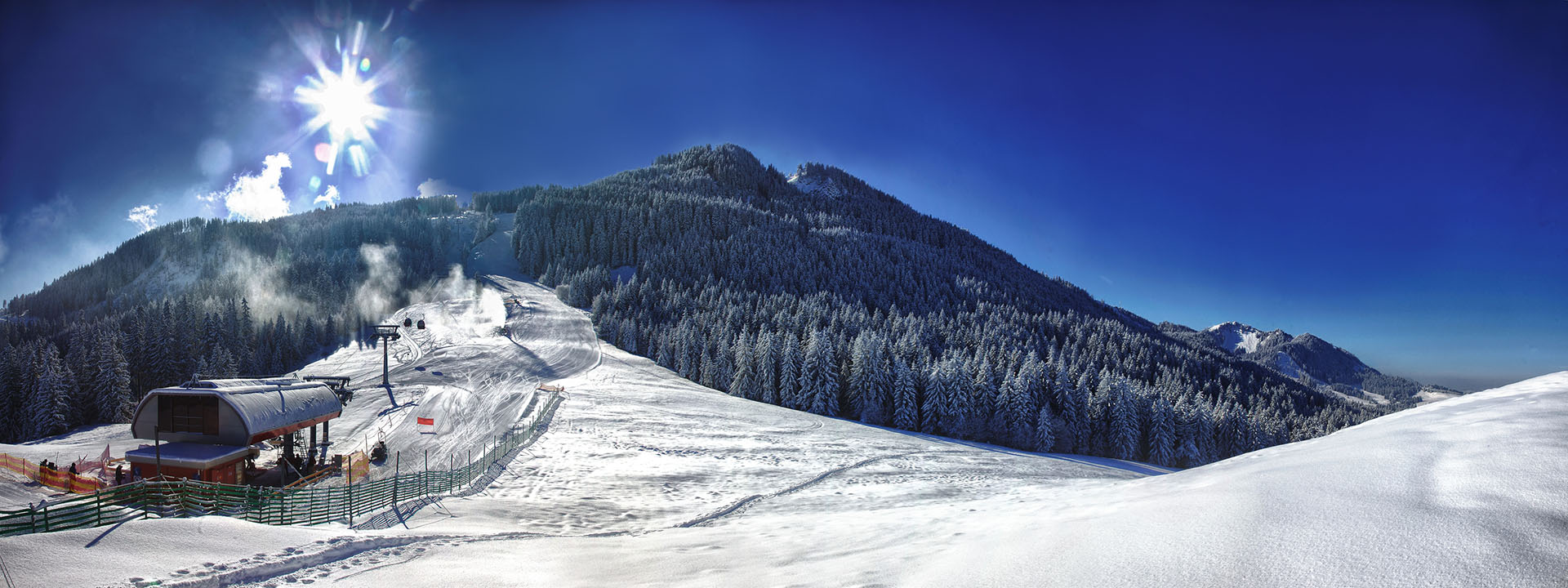
This was exactly the situation at the ski resort Alpspitzbahn Nesselwang in January 2026. For S&E – SlopeExperts, it was a practical example of how systematic analysis, targeted adjustments, and enhanced operator awareness can deliver measurable improvements - even under difficult climatic conditions.
This was a job that exemplifies what professional slope preparation is really all about:
Understanding physics, adapting processes, and getting people on board.
Initial Situation: When the Snowpack Stops Sintering
Warm temperatures during the day, minimal nighttime cooling, and the inability to produce technical snow led to massive changes in the snow structure. Continuous cycles of warming, cooling, milling, compacting, and reworking led to a loss of bonding capacity within the snowpack.
What remained was a coarse-grained, semolina-like structure – colloquially known as "sugar snow." This snow can hardly sinter. The result: low binding capacity and rapid hump formation.
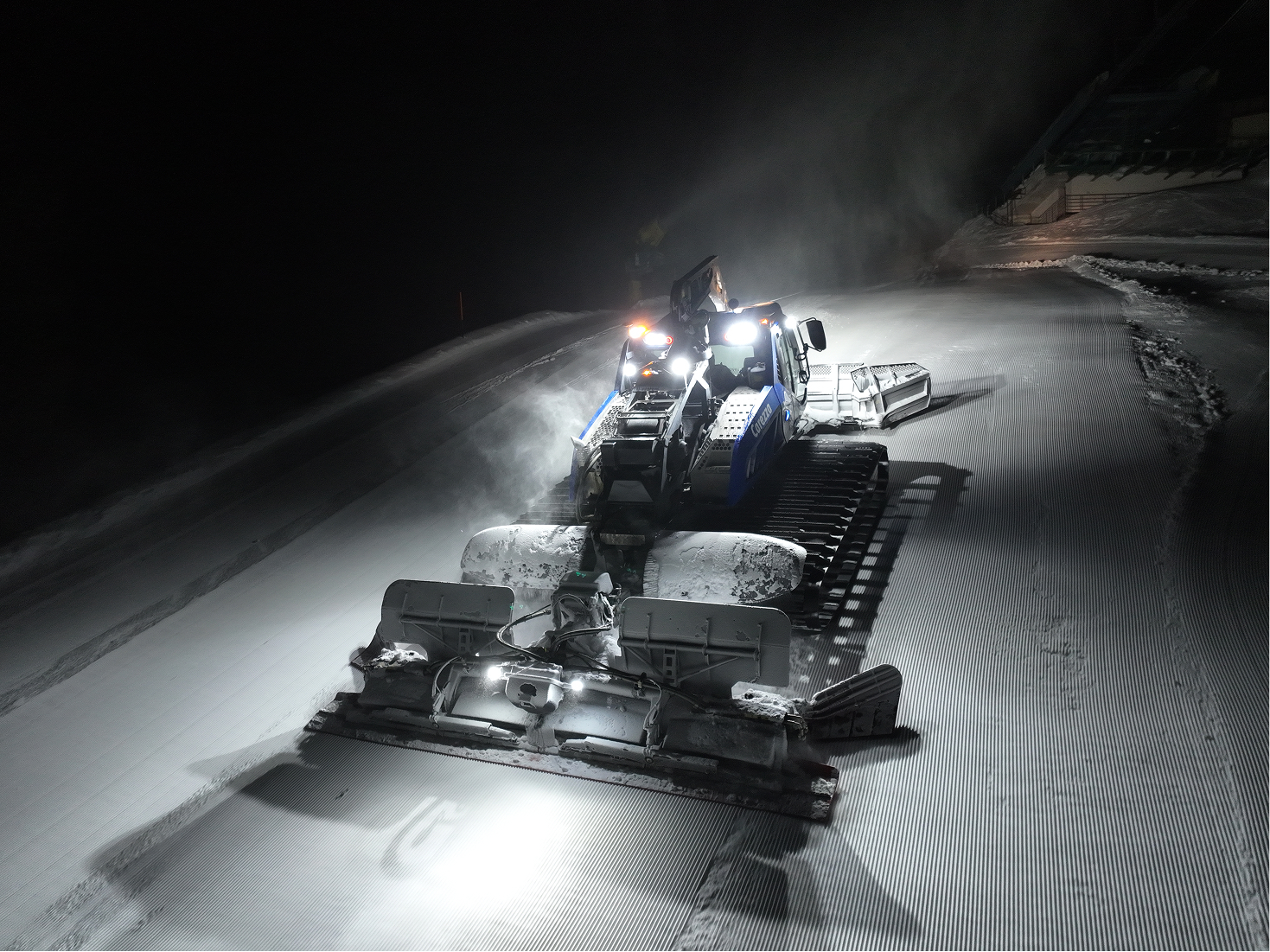
The challenge was intensified by daily night skiing operations. At 4:00 p.m., the slope was groomed and prepared for the evening, then heavily used for night skiing, and finally prepared again for the next day. This double workload significantly increased the mechanical stress on the snow cover.
This raised a key question for the management:
How can the quality of the slopes be stabilized without restricting night skiing as an economic mainstay?
On-site Analysis: Critical Sections and Systemic Causes
During the joint slope analysis with the operations managers, two critical sections were identified:
- the steep section below the top station of gondola lift 1
- a bottleneck with a narrowing of 2 vehicle widths (approx. 9 meters / 10 yards)
In both areas, there was heavy snow transport downhill. Skiers moved large amounts of material, which led to rapid mogul formation and unstable surfaces.
However, the causes were not only related to skier frequency, but also to the interaction between slope design, grooming strategy, and pushing techniques.
For S&E – SlopeExperts, there is therefore always one fundamental question at the heart of optimizing slope preparation:
Where does structural damage occur — and why?
Immediate Action: Adjust Route Instead of Extra Work
The first optimization did not involve additional machinery but rather a refinement of slope alignment.
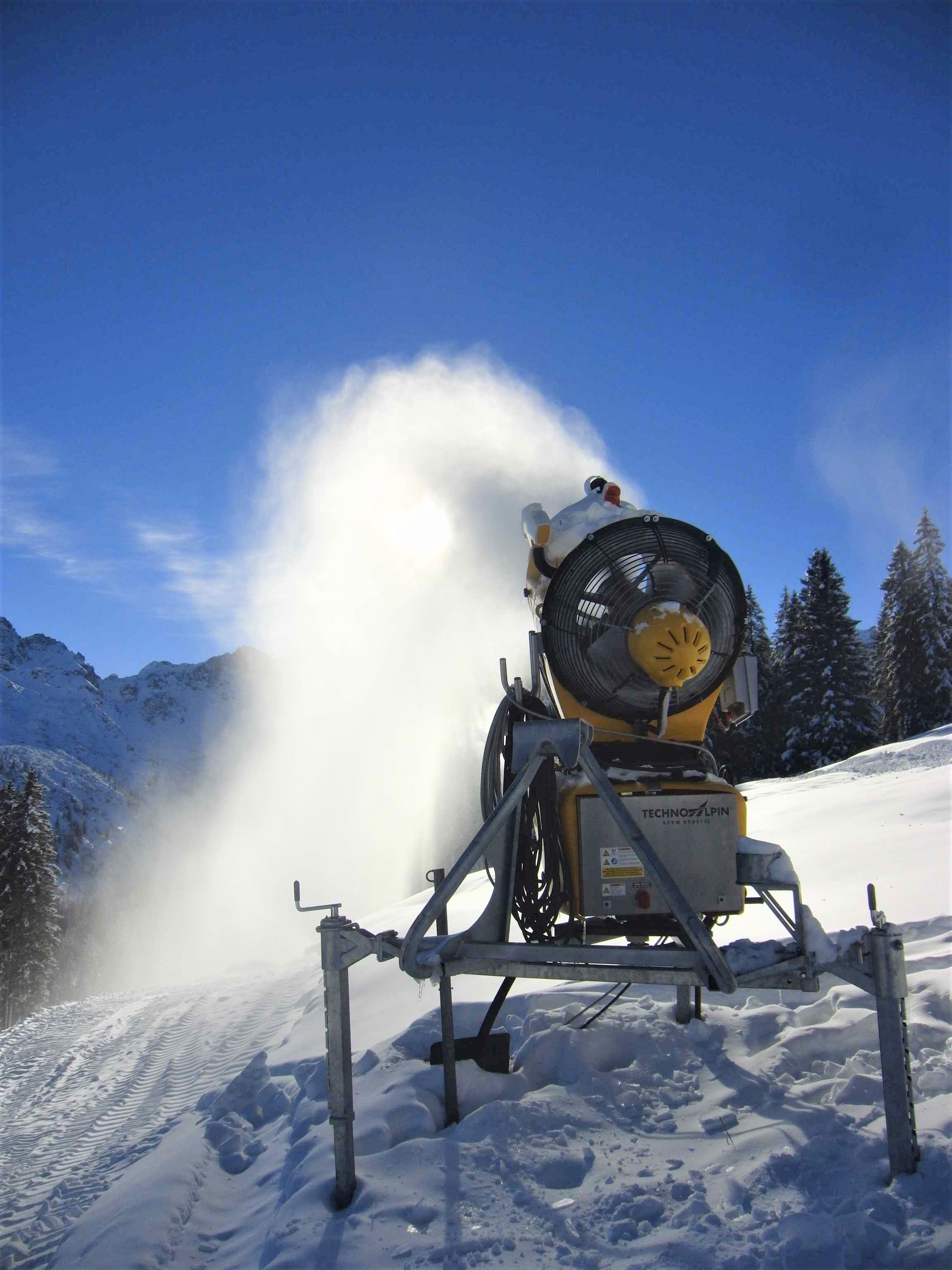
On the steep section, the entrance was widened and slightly realigned by repositioning a mobile snow gun. The entire section gained around one and a half grooming lanes in width. This made the slope line much more relaxed, created smoother skier flow and reduced lateral stress and downhill snow displacement.
The bottleneck at the narrow section was gradually widened as well, reducing localized stress peaks and minimizing abrasion.
These structural adjustments alone significantly relieved pressure on the snowpack.
Sustainable Optimization: Training the Snow Groomer Operators
However, a stable slope is not created by the line alone. The decisive factor is how the available snow is worked with.
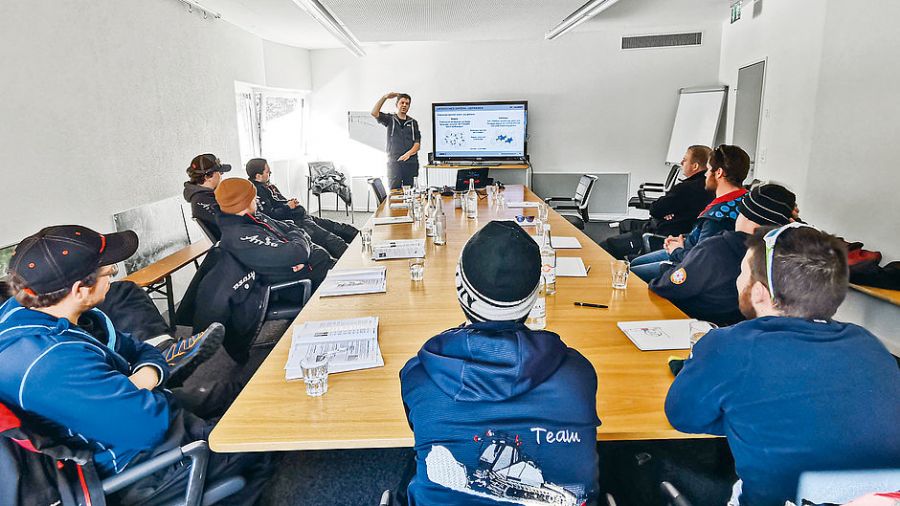
As part of the S&E –SlopeExperts training program "PROFESSIONAL Slope Grooming", two theoretical training units were therefore conducted. The focus was on:
- Snow physics and sintering processes
- Mechanical stress caused by tilling
- Effects of pushing operations
- Working along the fall line
In the theoretical training units, there was broad agreement. Many experienced operators confirmed that they had been working according to these principles for years.
However, practice told a different story.
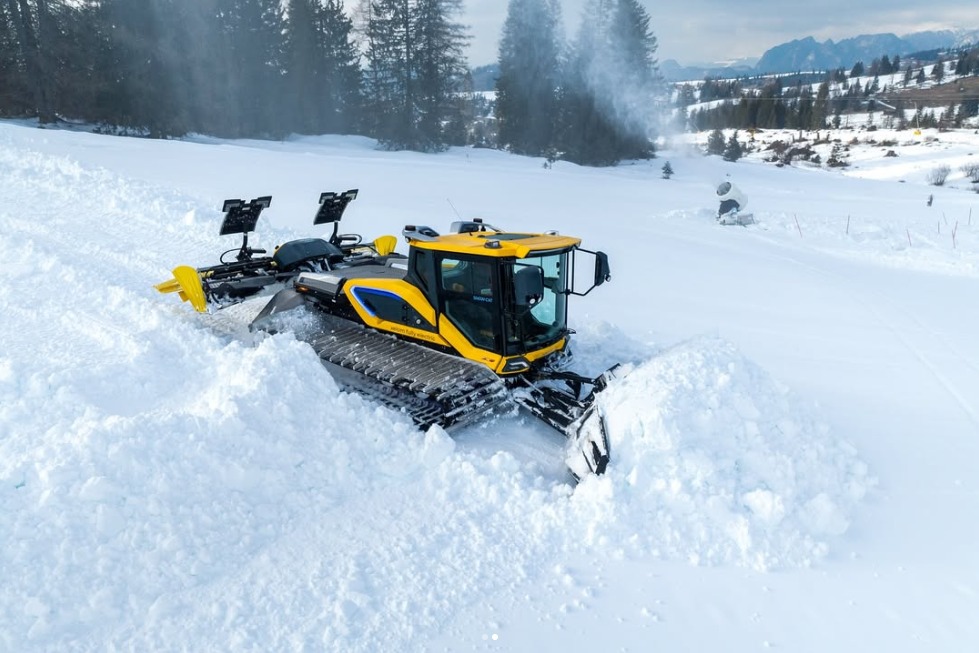
During the subsequent hands-on training session directly in the snow groomer, it quickly became apparent that snow was being shifted along the slope line instead of the fall line. This unnecessarily tore up the supporting sublayer of the ski slope. Although the surface appeared clean, it lost structural stability.
When asked, the driver of this snow groomer openly stated that the vehicle had no difficulty pushing the snow up the slope with the blade set at an angle and that he therefore saw no reason to change the way he worked.
This was precisely the key to the training. Once the actual difference between the two working methods had been made clear—particularly with regard to the damaged snow cover in relation to the amount of snow displaced—the connection became tangible for the driver. Working in the fall line on slopes with a lateral incline did not mean inefficient work, but often a much gentler approach for the supporting layer.
On the following training day, the same operator confidently repeated this insight in front of his colleagues. This moment was decisive.
Acceptance does not come from dictation, but from understanding.
The Result: Measurable Stabilization of Slope Quality
A clear change was already evident on the first day after the adjustments were implemented:
The formation of humps in critical sections decreased significantly. The snow remained more stable, was transported less downhill, and required less pushing work.
Less pushing work meant less interference with the load-bearing base layer—a self-reinforcing positive effect.
This resulted in several strategic advantages for the ski resort:
- Higher slope quality despite difficult conditions
- Less mechanical wear on the snow cover
- Reduced snow loss
- More stable skiing conditions, even for less experienced guests
- Long-term securing of snow reserves
Climatic pressure makes it particularly clear that every unnecessary movement of snow is a loss of resources. Every damaged sublayer potentially shortens the season.
Strategic Takeaway for Resort Managers
Optimizing slope preparation does not begin with more technology, but with understanding the entire work system.
The following are crucial:
- an analyzed slope alignment
- a clear pushing strategy
- trained operators with an understanding of physics
- a shared awareness of problems within the team
S&E – SlopeExperts analyzes not only the surface of a slope, but also the operational processes behind it. The aim is to improve slope quality in the long term, reduce operating costs, and strategically secure snow reserves.
Systematic optimization of slope preparation is a decisive competitive factor, especially for ski resorts with intensive night skiing operations or challenging climatic conditions.
Strategically Optimize Your Slope Grooming
You would like to:
- Improve the quality of the slopes in the long term?
- Reduce snow loss?
- Systematically train your team of operators?
- Increase operational safety under difficult conditions?
Then a structured analysis and training tool such as "PROFESSIONAL Slope Grooming" is the first step.
S&E – SlopeExperts – systemic optimization of slope preparation for sustainable snow stability.
Bereit, Ihre Pisten auf das nächste Level zu bringen?
Ob gezielte Schulung, strategische Beratung oder temporäre Verstärkung – wir sind Ihr Partner für effiziente Pistenpflege und nachhaltiges Schneemanagement.